
Data Across Four Hemispheres: Inside the First World Bank Enterprise Survey in Kiribati
By Katie Brennan - MKE Economist
18 March 2026
In the summer of last year, I led the World Bank Enterprise Survey (WBES) training in Kiribati. Kiribati (pronounced Kirr-i-bas), is a group of islands in the middle of the pacific ocean.
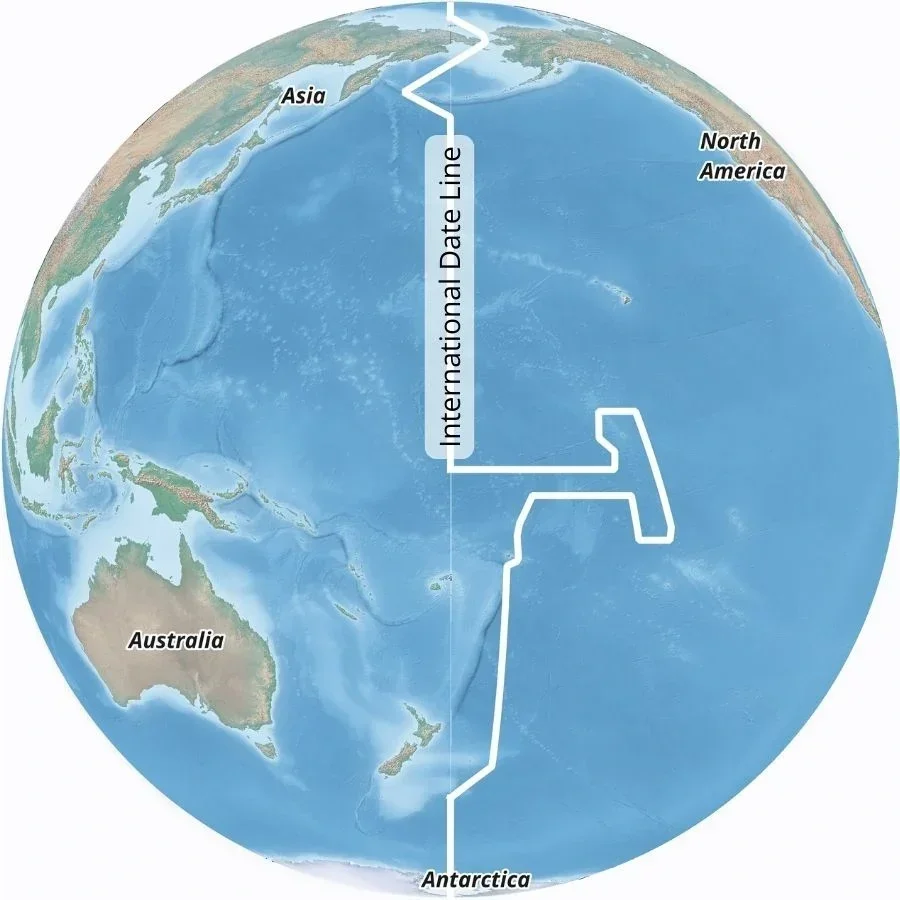
Some fun facts about Kiribati, it is the only country in the world that falls into all four hemispheres, and is the reason that the International Date Line was changed in 1995 to look in the unusual way that it now does.
Before 1995, the country was split by the 180° meridian, with the western islands 24 hours ahead of the eastern islands, causing a complex administrative and logistical situation. But now the line draws around the islands and splits them up into three time zones (UTC+12 (Gilbert Islands), UTC+13 (Phoenix Islands), and UTC+14 (Line Islands).
Kiribati is a record breaking destination, often taking the #1 spot for the world’s least-visited country and topping another more somber list: the first nation facing total submersion due to rising sea levels. Made up of 32 atolls, with an average altitude of only 2 meters above sea level, predictions are that the country will be fully submerged in the next 50 years.
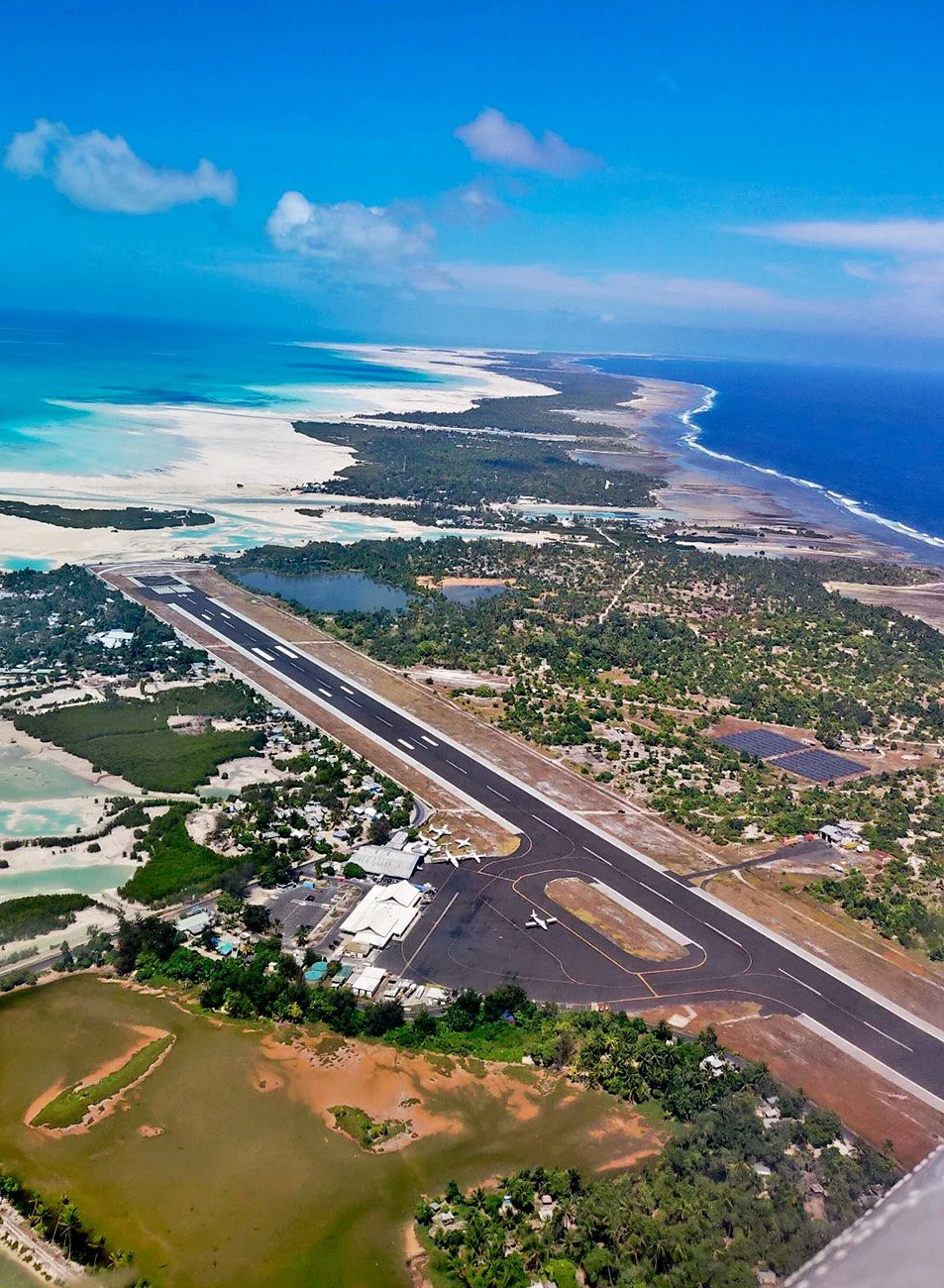
When I flew into Bonriki International Airport in South Tarawa, I could see that the runway stretching across the entire width of the island (as seen in the picture above). Driving to my accommodation, the ocean stretching out on either side of the one main road that runs down the length of the main island. The ocean's presence is formidable, and the resulting reliance on it impacts every part of daily life in Kiribati.
Due to the logistical difficulty of conducting a thorough survey in the Pacific islands, this was the first time the World Bank Enterprise Survey (WBES) was covering Kiribati. Kiribati is a unique island country, and having specific data about its business environment will be extremely useful for the people and businesses of Kiribati, as well as foreign investors and interests.
One of the values of the WBES is having comparable data for every country in the world. The questionnaire that was asked to 150 businesses in Kiribati last year was also asked to 426 firms in Afghanistan, 1,963 firms in Germany and 480 firms in Qatar. In total, the WBES has covered 225,000 firms in 160 countries since 2006. Mekong Economics is pleased to use our implementation expertise that we have gained running these surveys since 2009, particularly experience from surveys on other Pacific islands Vanuatu, Samoa, and Tonga.
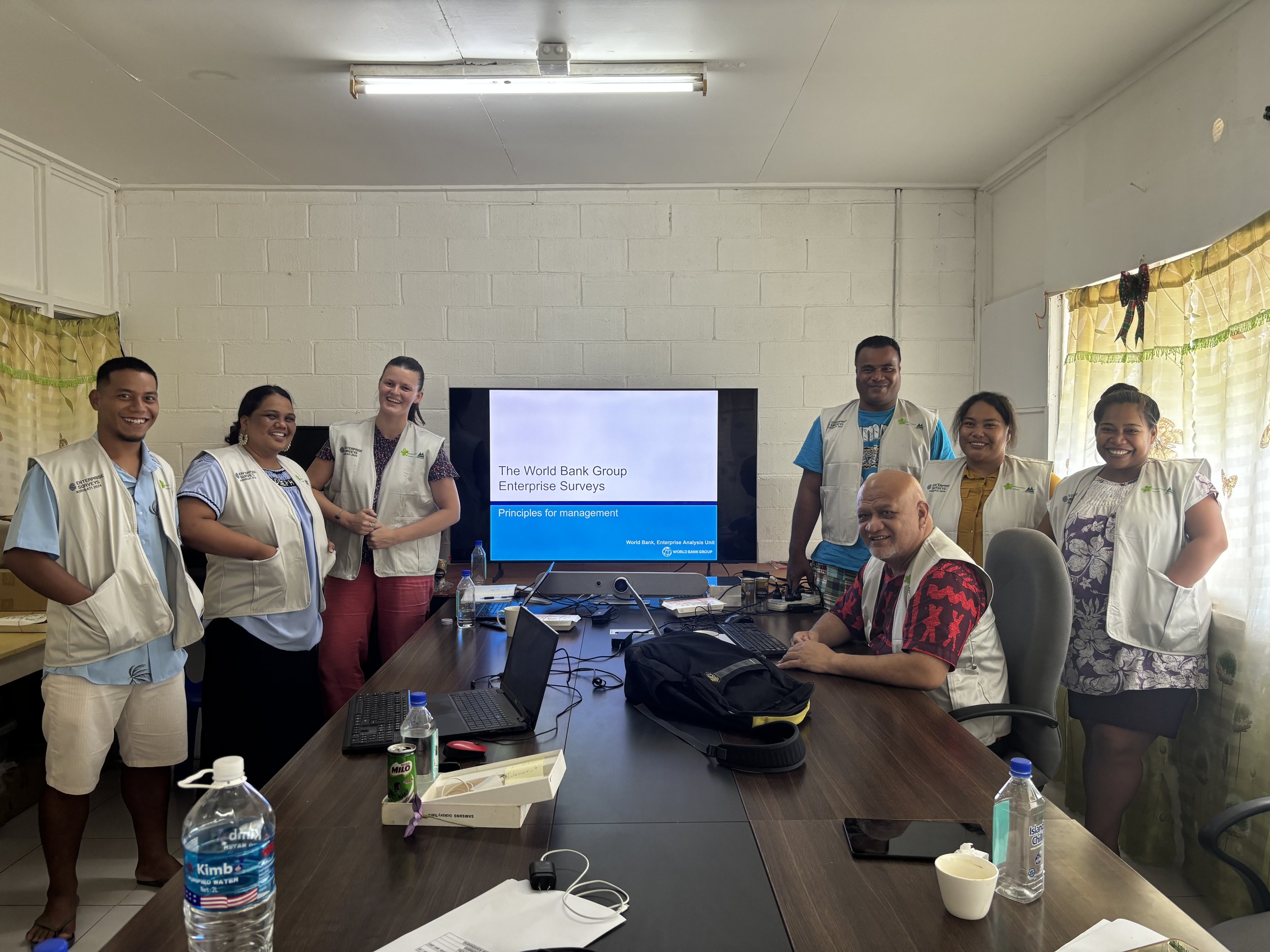
During our training week (pictured above), it quickly became clear that we had our work cut out for us. The local language is unique and nuanced, and translation had to be refined and updated in real-time as the training progressed through the questionnaire explanations.
A big part of our preparation involved navigating cultural sensitivities. We predicted how the more intrusive questions (e.g. those regarding finances or informal business practices) might be received, and brainstormed with our enumerators on the best ways to approach them. We also spent time identifying local business norms that would look unusual when compared to world-wide averages. For instance, in Kiribati, running water is free. If we hadn’t flagged this early, it would have been seen as an error during the World Bank’s data cleaning systems. These discussions are always a valuable part of training weeks, not only to save us time in the data cleaning process, but also to learn more about the country we are working in.
Working in countries with low infrastructure means power cuts are inevitable, a situation we are well-acquainted with in our Hanoi and Yangon offices. This proved true during our training week in Tarawa as well, leading to some last minute training location changes. It was then interesting to see this reflected in the final data, where it was noted that 88% of firms in Kiribati experience electrical outages in a typical month, more than double the average for the East Asia & Pacific region (39.7%). Electricity is a significant source of anxiety for managers, with 48% identifying it as their biggest constraint on the business environment. This figure is notably high when compared to the East Asia & Pacific region's average of just 10%.
The local team’s expertise was our greatest asset. With an enterprise list that was often patchy, missing both addresses and contact details, the enumerators had to rely on their own networks and community knowledge to track down the right people. These discrepancies could be due to a large number of newer enterprises, as 84% of firms are young (0–10 years old) and hiring at a rapid pace (annual employment growth rate of 17.5% compared to regional average of 6.4%). This may be one of the reasons we found our list a bit out of date with the private sector growing faster than directories could keep up with.
This information gap meant much of the screening happened on foot, with our team visiting neighborhoods and "asking around" to find the top manager/owner named on our list. Interestingly here, enumerators were more likely to be asking around for a female manager/owner than most other countries in the world - a pattern highlighted by the fact that 62.9% of firms in Kiribati have a female top manager/owner, nearly double the regional average of 35.5% and triple the average for other lower-middle-income countries (20.3%).
The country profile for Kiribati has now been published, following the successful completion of all 150 interviews by our local team within the allotted time frame. You can find more information here